
Key Questions The Guide Answers About Carbon Management
- What is carbon management, and why is it important?
- How do organizations actually measure and manage carbon emissions?
- What is the difference between emissions management and carbon planning?
- How do businesses reduce carbon emissions in a structured, realistic way?
- Which standards and frameworks are used globally for carbon management?

Carbon management addresses how carbon dioxide and greenhouse gas (GHG) are being monitored, controlled, and re-captured from the environment using natural and technological resources to achieve the goal of global warming up to 1.5°C by 2030 as advised by the Intergovernmental Panel on Climate Change. There is a growing body of evidence supporting the urgency of a structured decarbonization plan if humanity is to stay within this internationally agreed climate limit.
In 2023, the global carbon intensity of the economy, which is the amount of carbon dioxide released per unit of economic activity, fell by just over 1%: the slowest pace of decarbonization in more than a decade. (1) This stagnation reveals the gap between climate ambition and real-world emissions reduction performance. What is needed now more than ever is an effective Carbon Management Plan (CMP), comprising precise emissions management systems and carbon planning frameworks to survive beyond the next decade.
To fully understand this critical concept, its components, subsystems, and how it affects or compliments businesses and communities, we must answer this:
What Is Carbon Management And Why It Matters?
Carbon management is a strategic discipline that combines systematic measurement with planning and execution to reduce GHG emissions and align operations with climate goals. It is relevant across the corporate sector, government policy frameworks, and often neglected daily lifestyle, offering a structured way to take charge of carbon footprints through evaluation, control, and reduction.
What It Means In Practice?
It refers to the set of practices, systems, and policies, coupled with technological assistance, to identify, measure, report, mitigate, contain, and ultimately reduce carbon dioxide and GHG emissions across sectors and activities. At an organization’s scale, its integration across operations and value chain is critical to achieving climate goals and promoting sustainability.

It is not simply calculating a carbon footprint, but a continuous, iterative management discipline that links emissions data to strategic decision-making, providing a framework for understanding:
- The source of emissions,
- Quantifying their impact,
- And integrating emissions performance into corporate governance and operational processes. (2)
Components Of Carbon Management Plan (CMP)
To achieve the goal of reducing emissions, the organization must follow a carbon management hierarchy, which is a step-by-step approach to mitigate climate change and enhance the organization’s sustainability. This concept of hierarchy resembles the 4Rs of the circular carbon economy: Reduce, Reuse, Recycle, and Remove. However, it integrates more comprehensive steps to empower businesses to determine a starting point for their mitigation efforts. This robust strategy ensures transparency, compatibility, and credibility, the most desirable traits for the stakeholders in this sustainability-driven business era.
Click on the small circles to learn about the role of each component.
Frameworks And Standards For Carbon Management
Adherence to standard procedures and frameworks is important to ensure that progress can be tracked and compared to meet the organization’s environmental and ESG goals.
The Greenhouse Gas Protocol Corporate Standard is the most widely adopted global framework for corporate emissions accounting. It provides principles and methodologies for quantifying emissions at the organizational level, categorizing emissions into Scope 1 (direct), Scope 2 (indirect energy), and Scope 3 (value chain) categories. This framework is used by thousands of companies worldwide and forms the basis of most corporate emissions reporting and mitigation planning.
Complementing the GHG Protocol is the ISO 14064 series, an internationally accepted suite of standards that specifies requirements to calculate, report, and verify GHG emissions.
- ISO 14064-1 focuses on organizational emissions inventories.
- ISO 14064-2 addresses project-level emission reductions.
- ISO 14064-3 provides guidelines for verification assurance practices, thereby reinforcing the credibility of efforts to reduce emissions.
Emissions Management: From Measurement To Control
Emissions management is a sub-domain of the CMP. It explains how emissions are quantified, categorized, monitored, and verified in practice. Its focus is on the technical mechanics of handling emissions data.
The unit of analysis here is emissions as opposed to carbon management, where it is the organization or system.
In simple words, emissions management is a functional subsystem, while a CMP is the governing structure that uses multiple subsystems, including managing emissions, to achieve long-term objectives.
Here are the steps organizations take to manage and reduce their emissions.
1. Establishing Emissions Inventory
The first step is to build a rigorous emissions inventory. This data is based on emissions that are calculated across all activities of an organization as observed and planned in the first step of the CMP.
2. Scope Categorization
Emissions are grouped into three broad scopes for measurement:
- Scope 1 includes direct emissions from sources owned or controlled by the entity, such as combustion in boilers, furnaces, and company vehicles.
- Scope 2 covers indirect emissions from the generation of purchased electricity, heat, or steam that the organization consumes but does not directly produce.
- Scope 3 encompasses all other indirect emissions that occur across the value chain, such as those associated with purchased goods, business travel, waste, and product use. Scope 3 is often the largest and most complex to quantify, but is critical for comprehensive carbon planning.

3. Selecting Measurement Methods
There are several technical methods for emissions measurement. Organizations may use supplier-specific data when high-quality data is available, or average and hybrid methods that combine activity data with industry emission factors. Advanced digital platforms, like SAP, increasingly automate data collection and reporting processes and integrate with enterprise systems to support real-time or periodic emissions tracking.
4. Monitoring And Verification
After measurement, the organization must apply systematic monitoring. This can involve internal controls, automated data systems, and independent third-party verification. Verification improves credibility by confirming that reported data is accurate and complete and that methodologies adhere to accepted standards. This is especially pertinent when emissions data is used for regulatory compliance, investor reporting, or carbon credit markets. (3)
Carbon Planning: Strategic Roadmaps To Reduction
Carbon planning forms the strategic aspect of the management plan that involves planning, designing, and coordinating actions. At this stage, emissions are known, quantified, and categorized. Now the business must set reduction targets and develop a roadmap for ‘how to achieve them.’
A well-designed carbon plan ensures that reduction initiatives are prioritized and resourced effectively, and that progress is tracked against interim and long-term goals.
Science-Based Targets
A central concept in carbon planning is aligning corporate targets with climate science. Targets set in line with limiting global warming to 1.5 °C or well below 2 °C are known as science-based targets. These targets typically involve near-term emission reduction goals and long-term net-zero objectives. By anchoring planning to scientific pathways, it moves beyond voluntary aspirations to climate-aligned strategies.
Integration With Business Operations
This planning must integrate with core business functions, including procurement, operations, value-chain, finance, risk management, and product lifecycle. This integration ensures that emissions reduction is not an isolated sustainability effort but a driver of operational efficiency and strategic resilience.
Policy And Economic Instruments
Carbon planning is nothing if within the broader policy and economic context. Instruments like carbon pricing, known as carbon taxes or emissions trading systems, create financial incentives to reduce emissions.
A global study published in Nature Communications examined the real-world impact of carbon pricing policies across more than 21 jurisdictions, including carbon taxes and emissions trading systems. The study found that introducing a price on carbon led to average GHG emission reductions of -5% to -21% with an average reduction of -10.4% across all jurisdictions. Well-designed systems with broader coverage and stronger enforcement were found on the higher end of this range.
Overall, the evidence shows that carbon pricing has consistently resulted in measurable and sustained emission reductions, rather than symbolic or marginal effects.
Emissions Reduction Strategies
Reducing carbon emissions requires a portfolio of operational and technological strategies. Core approaches include energy efficiency improvements, switching to renewable energy sources, optimizing logistics and supply chains, and investing in low-carbon technologies.
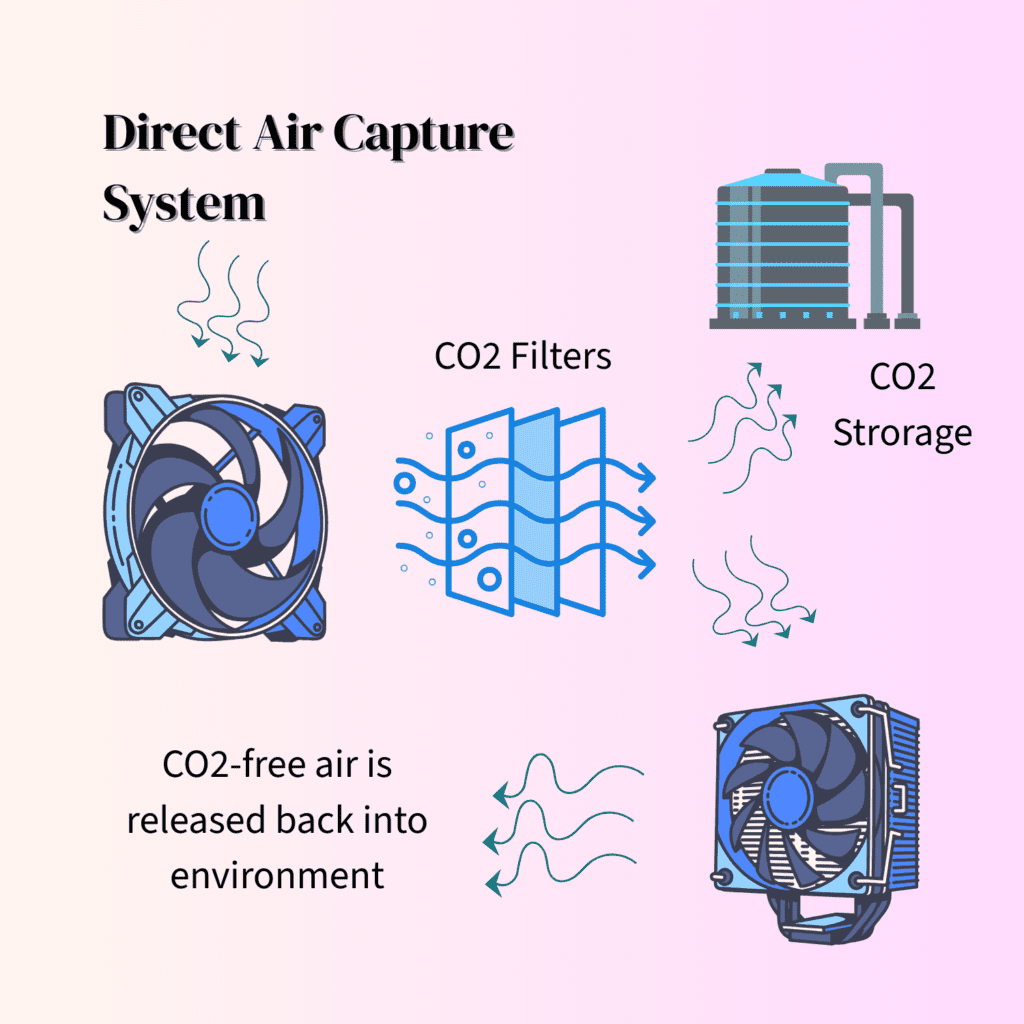
In hard-to-abate sectors such as heavy industry and power generation, advanced Carbon Capture and Utilization or Storage technologies (CCUS) are increasingly important. These technologies capture CO₂ at its source or from the atmosphere and either store it underground or use it in industrial processes.
For example, a 2025 cross-country study published in the Journal of Carbon Research covering 43 nations between 2010 and 2020 found that carbon capture and storage (CCS) deployment leads to measurable reductions in carbon intensity. In high-income countries, a 1 percent increase in CCS capacity in the power and heat sector reduced carbon intensity by 0.092 percent, while the same increase in the cement sector reduced carbon intensity by 0.132 percent. Smaller but statistically significant reductions were also observed in iron and steel industries.
Life cycle assessment (LCA) provides a comprehensive view of emissions across a product’s full lifespan, from material extraction to end use. Integrating LCA into carbon planning helps organizations identify emissions hotspots and prioritize reduction actions where they will have the greatest impact.
Technological And Natural Carbon Management Tools
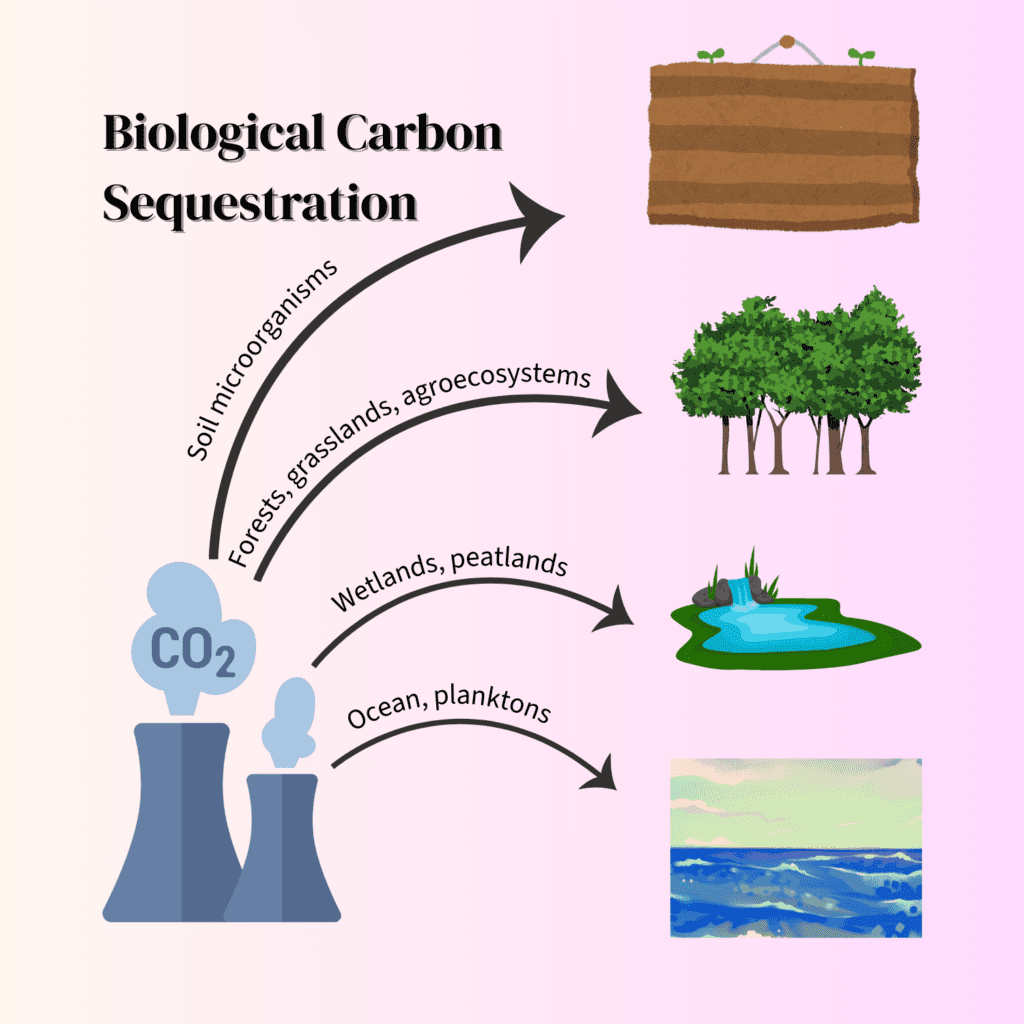
Emerging tools such as direct air capture, biological carbon sequestration, and enhanced mineralization support broader objectives by removing carbon already in the atmosphere. According to projections, achieving net-zero goals will require scaling carbon removal to billions of tons annually, far beyond the current capacity of these technologies. (4)
Carbon sequestration through natural systems such as forests, wetlands, and soils also plays a critical role. These natural carbon sinks absorb atmospheric CO₂ and provide ecosystem benefits. In many national and corporate planning frameworks, nature-based solutions complement technological solutions as part of a balanced carbon management portfolio.
Case Studies And Cross-Sector Application
Robust carbon management systems have been linked to measurable improvements in emissions performance in jurisdictions with emission trading schemes. An empirical research examining firms operating under pilot emissions trading systems provides valuable insights into how structured carbon management influences real-world performance. The study analyzed corporate behavior before and after the introduction of regulated carbon markets and assessed changes in emissions intensity, internal management practices, and strategic decision-making. The findings demonstrate that policy-driven carbon constraints can meaningfully reshape organizational behavior when supported by credible measurement and planning mechanisms.
Key lessons from the study include:
- Firms subject to emissions trading showed measurable improvements in emissions performance compared to non-participating firms.
- Organizations strengthened internal data systems to improve emissions measurement accuracy and reporting reliability.
- Carbon pricing exposure incentivized firms to integrate carbon considerations into investment and operational decisions.
- Companies with pre-existing decarbonization plans adapted more efficiently to regulatory requirements.
- Long-term emissions reductions were more consistent where monitoring and compliance mechanisms were clearly defined.
Conclusion
Hence, carbon management is pre-dominantly a measure of how prepared organizations and institutions are for a carbon-constrained future. Its real value lies in consistently using reliable data to guide decisions, adapt strategies, and integrate carbon considerations into everyday planning rather than treating them as standalone obligations. As climate limits tighten and accountability increases, approaches that are structured, adaptive, and grounded in evidence will be essential for achieving durable and credible emission reductions.
Frequently Asked Questions (FAQs)
What is the difference between carbon management and emissions management?
Carbon management is the broader strategic framework that includes emissions management as a core component. The latter focuses specifically on quantifying and controlling greenhouse gas emissions, while the former uses that data to guide strategic planning and reduction actions.
Why are Scope 1, Scope 2, and Scope 3 emissions important?
These categories help organizations understand where their emissions originate — directly from operations, indirectly from purchased energy, or indirectly from value chain activities — so that reduction strategies can be targeted and effective.
How do science-based targets influence carbon planning?
Science-based targets align greenhouse gas reduction goals with climate science, ensuring that reductions contribute meaningfully to global climate stability rather than arbitrary internal benchmarks.
Are carbon credits a reliable tool in carbon management?
Carbon credits can play a role in offsetting emissions, but they should complement real emissions reduction at source rather than replace it. Credit quality, additionality, permanence, and avoidance of double counting are essential for credibility.
What role do standards like ISO 14064 play in carbon reporting?
ISO 14064 provides internationally accepted requirements for quantifying, reporting, and verifying greenhouse gas emissions, ensuring consistency and transparency in carbon management systems.